

 Austria
 Belgium
 Bulgaria
 Denmark
 France
 Germany
 Italy
 Netherlands
 Poland
 Portugal
 Romania
 Russia
 Serbia
 Spain
 Turkey
 United Kingdom
 Ukraine
 China
 Mexico
 Morocco
 West Africa

2026 Harvest Review: resilience matters more than ever for maize and sunflower across Europe
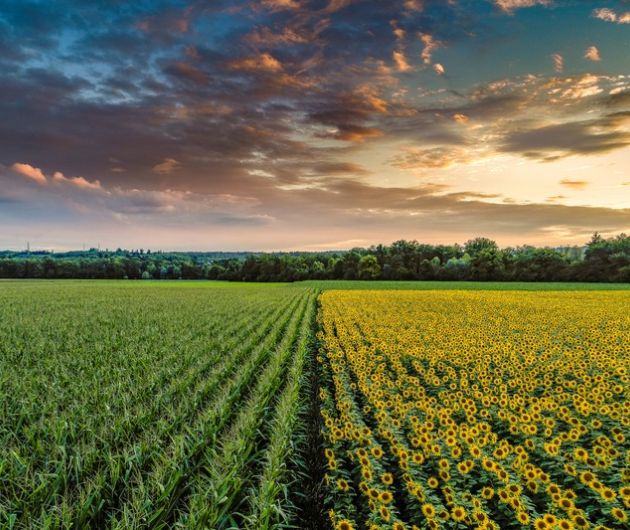
While maize and sunflower performance varied significantly between regions, the 2026 season confirmed the growing importance of resilient genetics to secure production in an increasingly variable climate.
Maize 2026: managing heat and water stress
The 2026 maize season was marked by repeated heatwaves and severe moisture deficits across large parts of Europe. Grain maize yields are forecast at 6.42 t/ha, around 9% below the five-year average, while silage maize yields are estimated at 36.4 T/ha, 15% below average.
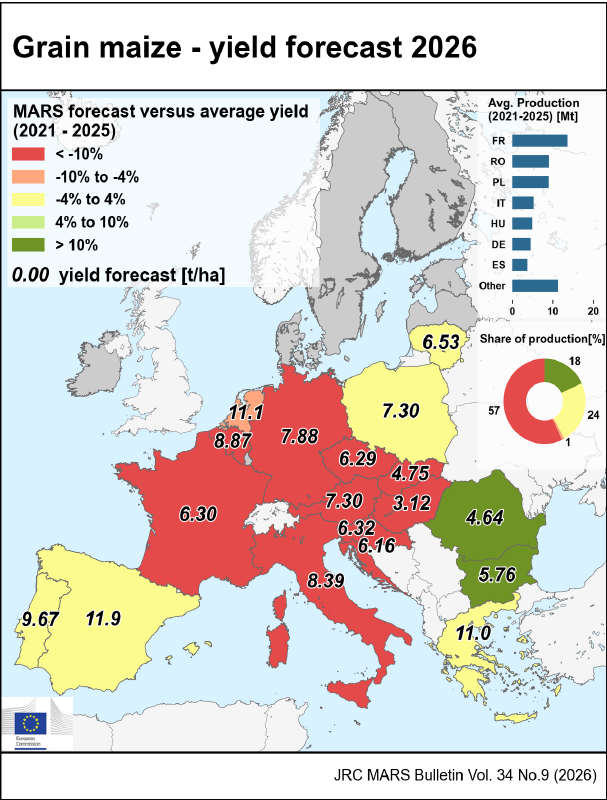
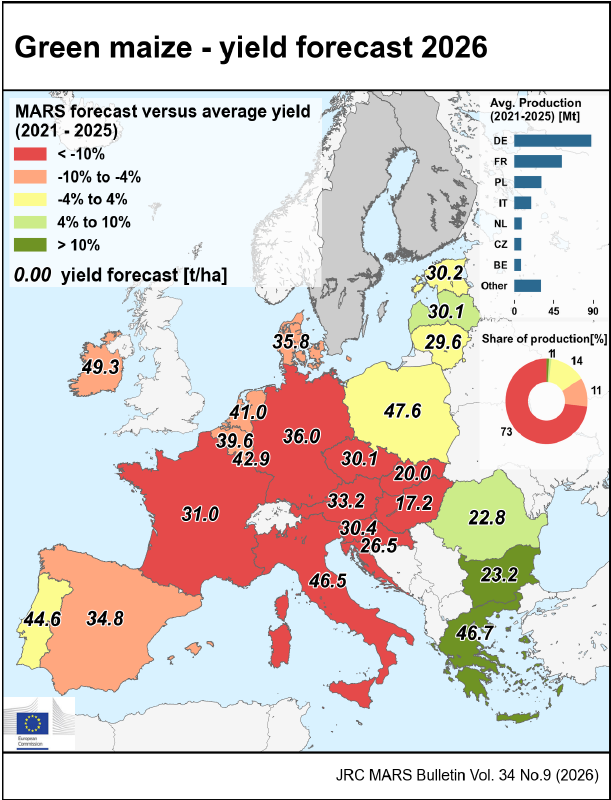
Harvest results confirm the strong impact of summer drought, with significant differences between regions depending on rainfall and growing conditions.
- France experienced several heatwaves combined with irrigation restrictions, particularly affecting grain filling. Yield forecasts are around 28% below the five-year average.
- In Central Europe, including Germany, Austria, Czechia and Slovakia, hot and dry conditions affected pollination, ear development and biomass accumulation.
- Southern and South-Eastern Europe, notably Hungary, Italy, Slovenia and Croatia, also faced intense drought and high temperatures. In Hungary, forecasts indicate yield reductions of approximately 30% for maize.
- More favourable conditions were observed in parts of Eastern Europe, where summer rainfall helped preserve crop potential and partly offset losses recorded in western, central and south-eastern regions.
The key lesson remains clear: heat and water stress during critical crop stages continue to be the main challenges for securing maize performance across Europe.
Genetics delivering performance under pressure
In these demanding conditions, farmers increasingly rely on genetics capable of maintaining performance despite climatic stress.
Throughout the season, MAS Seeds observed very encouraging field results from several WATERLOCK® hybrids, including MAS 251T and MAS 335I, which demonstrated strong adaptation to dry environments.
Within the silage segment, MAS 270S GREEN+ and MAS 409H GREEN+ stood out for their ability to maintain green leaf area and photosynthetic activity longer into the season, helping preserve forage quality and performance under stress conditions.
As climatic variability increases year after year, genetic resilience is becoming a strategic lever for securing yields and supporting farm profitability.
Sunflower 2026: a drought-tolerant crop put to the test
Sunflower continued its expansion across Europe in 2026, with cultivated area increasing by approximately 8%, confirming its importance within crop rotations and its reputation as a drought-tolerant crop.
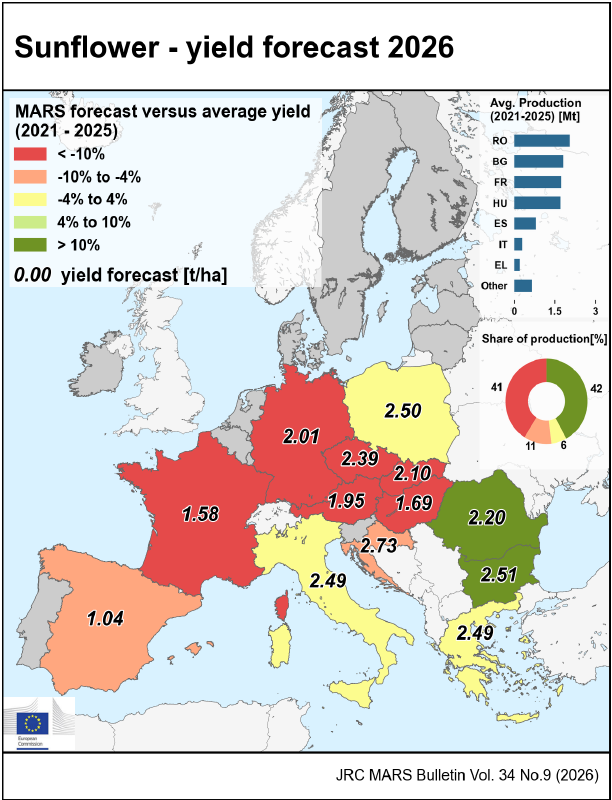
However, the season showed that even sunflower has its limits when exposed to prolonged periods of heat and water deficit. At EU level, sunflower yields are estimated at 1.93 t/ha, 3% below the five-year average.
From May to September, many European regions experienced successive heatwaves. The consequences were visible across fields: shorter plants, smaller heads, leaf scorching, disrupted pollination and limited grain filling.
Yet despite these extreme conditions, sunflower often maintained a competitive economic position compared with other spring crops, confirming its value in increasingly dry environments.
Genetics making the difference
The 2026 season also reinforced a key agronomic lesson: variety choice matters more than ever. In several regions, early-maturing hybrids combined with early sowing dates were better able to avoid the most critical heat periods during flowering, helping to protect yield potential.
Looking ahead to 2027, adaptation will remain the priority. Selecting the right genetics and maturity profile for each environment is becoming essential to manage climatic uncertainty and maximize crop performance.
Among the sunflower hybrids to watch for next season are MAS 823SU, MAS 820AR, MAS 900SU WATERLOCK® and MAS 920CP, developed to help farmers address increasingly challenging growing conditions.
Building resilience for the future
The 2026 harvest season once again demonstrated that climate resilience is no longer a future challenge: it is a present reality.
Across both maize and sunflower, the ability of genetics to withstand heat and water stress is becoming a decisive factor for crop success.
At MAS Seeds, our breeding efforts continue to focus on delivering innovative and resilient genetics that help farmers secure productivity, year after year, whatever the season may bring.
Source: MAS Seeds analysis based on field observations and regional crop monitoring, including JRC MARS data.
Discover other news and media
Each year, MAS Seeds’ breeding programs generate vast amounts of data from field trials, agronomic observations, and genetic analyses. To help its teams unlock the full value of this information, MAS Seeds has partnered with Ploid to integrate artificial intelligence into its analytical workflows. The collaboration aims to make advanced analyses more accessible, helping researchers […]

The Haut-Mauco industrial industrial site (France) has achieved ISO 50001 certification following an audit carried out by AFNOR Certification. This recognition rewards several years of collective work to better monitor, manage and reduce our energy consumption.
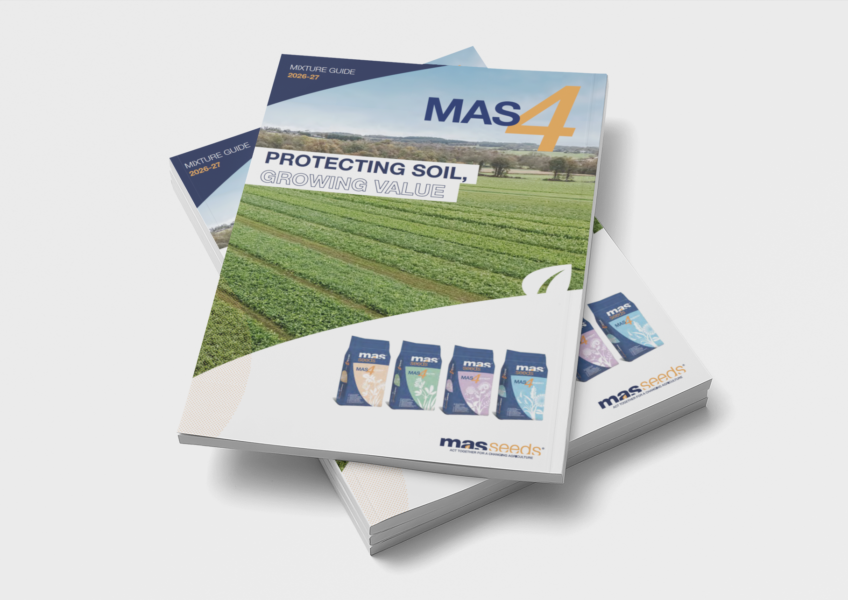
Protecting soil, growing value! MAS4 Seed Mixture Guide presents the seed mixture portfolio for a changing agriculture. The guide also lays out our convictions and our portfolio strategy.