

 Austria

 Denmark
 Germany
 Netherlands
  Poland
 Romania

 Spain
Spain  Turkey
  United Kingdom
  Ukraine
  China
China 
 Morocco
  West Africa
R&D Pilot Farms for Regenerative Agriculture
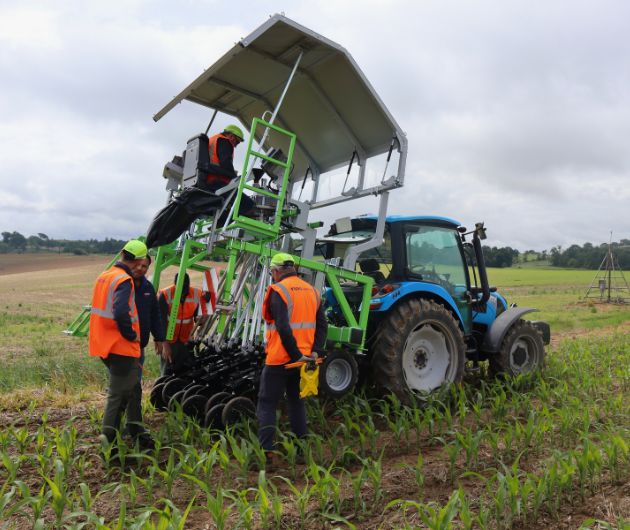
In 2026, MAS Seeds has structured a network of R&D pilot farms dedicated to regenerative agriculture. The objective is to conduct research in real-world conditions, over the long term, to test innovative practices and develop concrete solutions to support the agricultural transition
Why set up pilot farms in R&D?
Regenerative agriculture relies on a holistic, farm-scale approach to crop rotations and long-term planning.
However, traditional R&D methods, based on field-scale trials conducted over a single growing season, do not allow for a full understanding of its effects or the interactions between different practices.
The network of R&D pilot farms enables MAS Seeds to conduct research under real-world regenerative agriculture conditions, at the farm level and over several years.
Partner farmers at the heart of the system
The network of R&D pilot farms is composed of 9 farms, spread from the Landes region to Normandy (France), representing diverse soil and climate conditions and cropping systems.
These pilot farms were selected for their long-standing commitment to conservation agriculture (CA) or simplified cultivation techniques (SCT), some for over 30 years.
Their expertise is a key driver for advancing research and developing solutions tailored to real-world conditions.
Three R&D programs deployed within the network
The research conducted on the pilot R&D farms is structured around three complementary programs:
- COMPAMAÏS, a program dedicated to maize companion plants, aims to identify suitable variety-companion plant combinations and technical approaches adapted to intercropping ;
- The development of cover crops and forage mixtures, with in-depth work on the science of mixtures and their adaptation to rotations, soils, and subsequent crops (MAS4 portfolio);
- The varietal selection of maize and sunflower, in order to identify and develop varieties capable of performing well in simplified cultivation systems.
“In 2026, the goal is to establish the foundations of a working relationship with each farmer participating in the program.In 2027, the aim will be to foster the network in order to encourage the exchanges between farmers, the sharing of experiences, and collective learning around the innovations being tested.” Marie Boncompain, R&D Project Manager
Discover other news and media

Can we predict a variety’s performance… before it’s ever been observed in the field? That’s one of the challenges we’re tackling at MAS Seeds. With Industry 4.0 tools, our approach to variety selection is evolving in a meaningful way: 🌱 Our maize and sunflower varieties are now better described and documented through advanced statistical analysis. […]
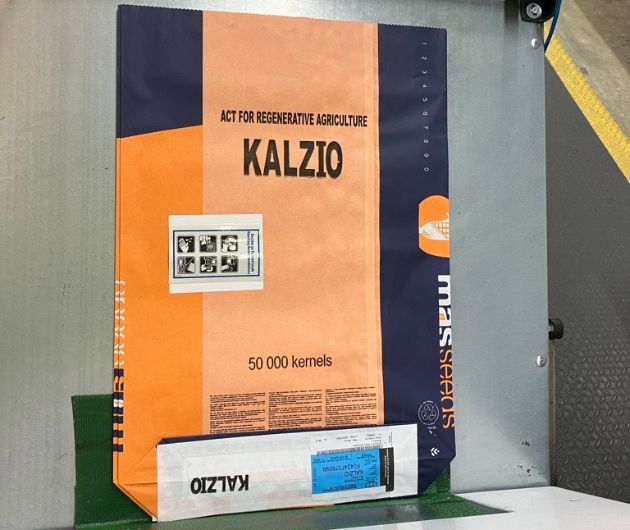
You may have noticed the mention “Act for Regenerative Agriculture” displayed on MAS Seeds seed bags of maize.This wording aims to make visible, directly on our products, our commitment in favor of regenerative agriculture. Why talk about regenerative agriculture today? For over fifteen years, farmers have faced stagnant and unstable yields in many agricultural regions. The progressive degradation of […]
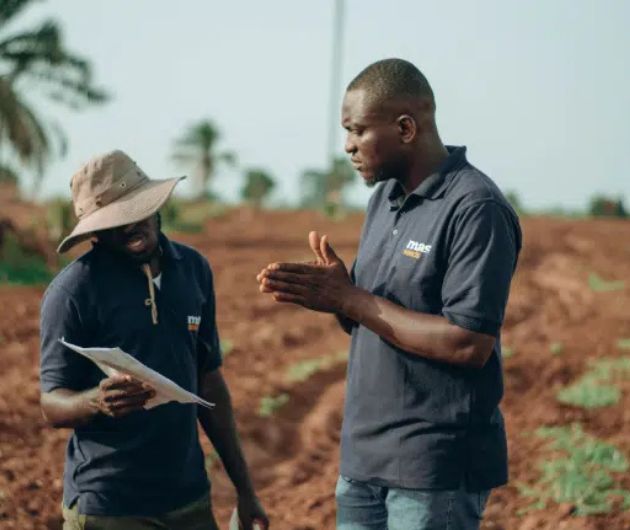
🎯 Business ambition: Significantly accelerate our development in the region, with a growth trajectory over the next 2 to 3 years but to get there, the challenge isn’t only commercial, it’s also technical and industrial. 🔑 The 2 key steps of our development: Our belief: Sustainable growth in West Africa means building as close as […]