

 Austria
  Belgium
  Bulgaria
  Denmark
  France
  Germany
  Italy
Italy  Netherlands
  Poland
  Portugal
  Romania
  Russia
  Serbia
  Spain
Spain  Turkey
  United Kingdom
  Ukraine
  China
China  Mexico
  Morocco
  West Africa
From data to the field: how we turn innovation into farmer performance
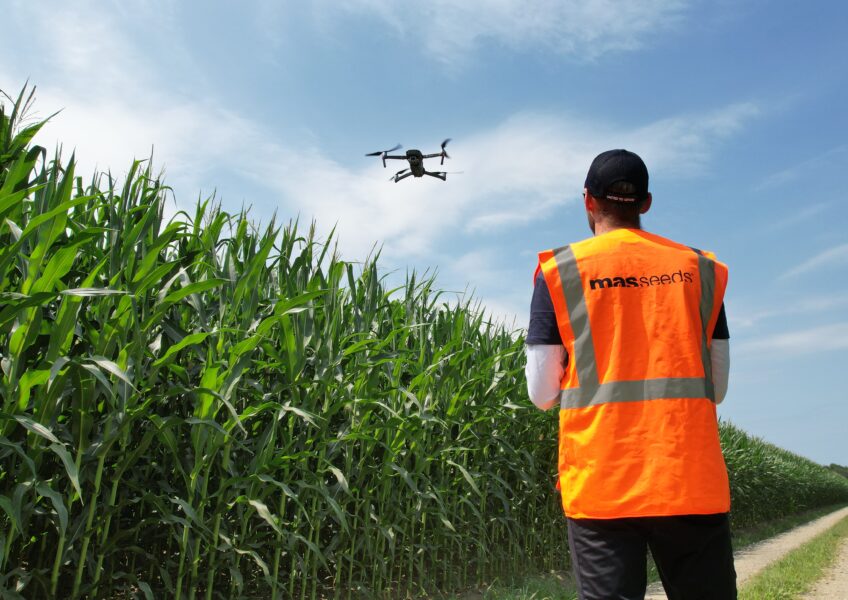
As farming conditions become increasingly unpredictable, we believe plant breeding must anticipate tomorrow’s challenges rather than simply respond to today’s. By combining genetics, environmental modelling, advanced phenotyping and data science, we develop reliable varieties that help farmers maintain performance in changing conditions.
Breeding for the field of tomorrow
To build resilient crops, we start by understanding how agriculture itself is evolving. Climate change is already influencing crop choices, varietal selection, and farming practices across Europe. To stay ahead of these changes, we use simulation models to assess how future climatic conditions may affect maize production and to guide our breeding strategies accordingly.
We expect farmers to increasingly focus on achieving the best economic return rather than maximizing yield alone. At the same time, regenerative farming practices are likely to play a growing role in strengthening farm resilience through healthier soils and reduced production risks.
These trends also influence how and where we evaluate new genetic material. Our trial networks are increasingly designed to reflect the environments and farming systems in which future varieties will need to perform.
Using data to improve selection accuracy
Advanced phenotyping tools, including drones and imaging technologies, help us collect larger volumes of high-quality information across our breeding programmes. This is particularly valuable during the early stages of selection, when large numbers of genetic materials must be evaluated efficiently.
By combining climate data, historical datasets and predictive models, we classify the climatic scenarios that grain and silage maize may encounter across Europe and estimate how often these conditions are likely to occur in the future. This allows us to identify hybrids that perform strongly in specific environments while maintaining stability across a wide range of conditions.
“We are more precise, we identify interesting features earlier, and we can test more genetic variability.”
Colin Guillaume, Head of Maize Product Development, MAS Seeds
Our goal is not simply to develop hybrids that excel under ideal conditions, but to provide farmers with reliable performance when conditions become less predictable.
Connecting genomics with field performance
The same approach guides our sunflower breeding programmes. Yield stability and oil content remain key drivers of farm profitability, while drought, heat and evolving disease pressures continue to challenge crop performance.
To address these challenges, we combine genomic selection, precise field phenotyping and environmental characterisation within a single breeding framework. Genomic tools help us predict the potential of new material, while field observations and environmental data reveal how plants respond under different growing conditions.
“The breakthrough is not one isolated technology, but the connection between genomics, precise field phenotyping and environmental characterisation within a single breeding approach.”
Mihaela Patrascoiu, Head of Sunflower Product Development
Turning innovation into value for farmers
For farmers, innovation is not measured by algorithms, datasets or laboratory technologies. What matters is having hybrids that establish well, tolerate stress, withstand major diseases and continue to deliver strong performance when growing conditions are far from ideal.
That is why our work in genomics, climate modelling, phenotyping and data analysis is focused on one objective: making better-informed breeding decisions and delivering varieties that farmers can depend on. As technologies evolve, our mission remains the same: transforming science and data into reliable performance in the field.
Discover other news and media
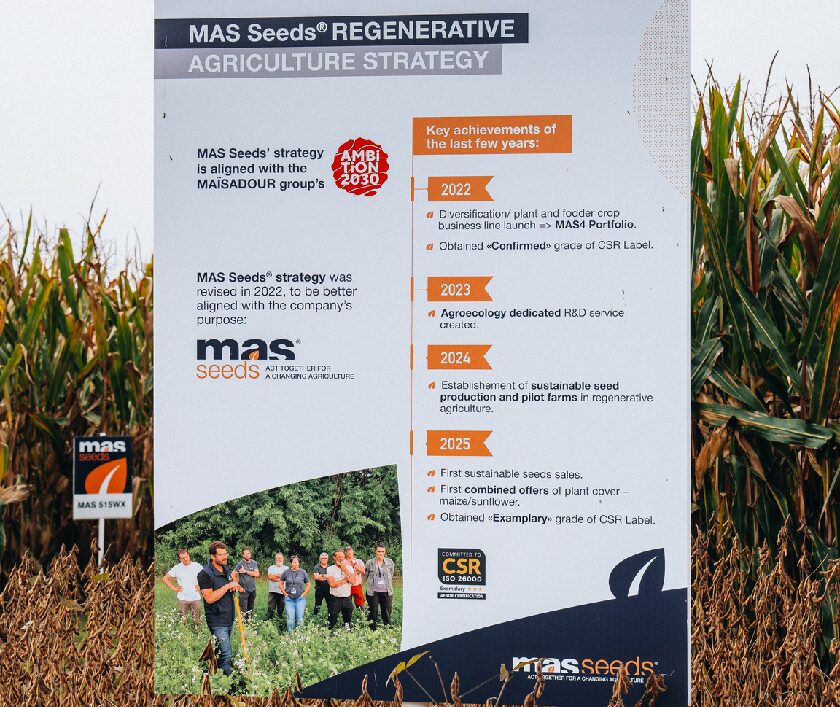
For MAS Seeds, regenerative agriculture is not only about the solutions we offer to farmers. It is also about the way we work across the whole seed value chain. Our strategy is to deploy regenerative agriculture in all key departments: R&D, production and business. 🧪 R&D: Developing solutions that combine agronomy and genetics🚜 Production: new […]
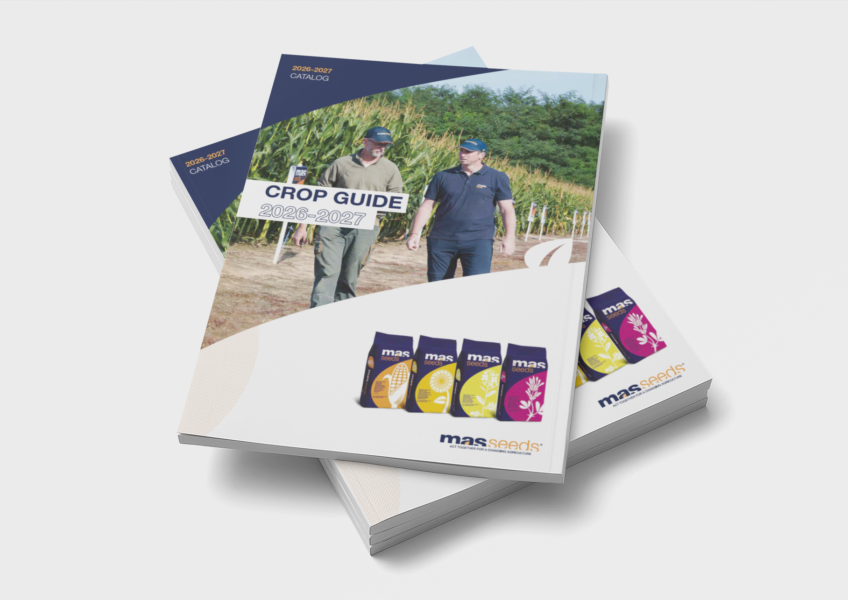
Explore our Crop and Service Guide to discover our solutions for maize, sunflower, oilseed rape, and alfalfa. Designed to support high-performing and sustainable farming systems, our offering combines advanced genetics, including WATERLOCK® and GREEN+® for maize, HelioSMART® and NO RUST® for sunflower, with tailored agro-services such as NUTRIPLUS® services for dairy farmers and AGROPLUS® services […]
With around 1.2 million hectares of sunflower, the Romanian market remains stable and highly strategic. But behind this potential, growers are looking for hybrids able to answer several needs at once: herbicide tolerance, broomrape tolerance and mildew resistance. In some areas, more than 30% of sunflower fields are under high broomrape pressure, while mildew also […]