

 Austria
  Belgium
  Bulgaria
  Denmark
  France
  Germany
  Italy
Italy  Netherlands
  Poland
  Portugal
  Romania
  Russia
  Serbia
  Spain
Spain  Turkey
  United Kingdom
  Ukraine
  China
China  Mexico
  Morocco
  West Africa
Data-science to predict variety performance

Can we predict a variety’s performance… before it’s ever been observed in the field? That’s one of the challenges we’re tackling at MAS Seeds. With Industry 4.0 tools, our approach to variety selection is evolving in a meaningful way:
🌱 Our maize and sunflower varieties are now better described and documented through advanced statistical analysis.
📈 We can model their future performance — even in conditions or markets that haven’t been explored yet.
🎯 And soon: prescribing, from the very early stages, which varieties have the highest probability of succeeding in a specific target market.
For our customers, this means something concrete: product ranges that perfectly match their real field conditions. Innovation doesn’t stop at the field. It starts long before.

Find a product
Discover a full range of maize portfolio for all uses grain, silage or biogas, for organic agriculture, for temperate or tropical regions.

We will help you reach your potential in Africa
Discover our crop advices for african market

Contact us
Our local teams visit farms and distributors on-site to give you the best advice for your location. Find your local MAS Seeds consultant by visiting a country website or fill out our contact form here.
Discover other news and media
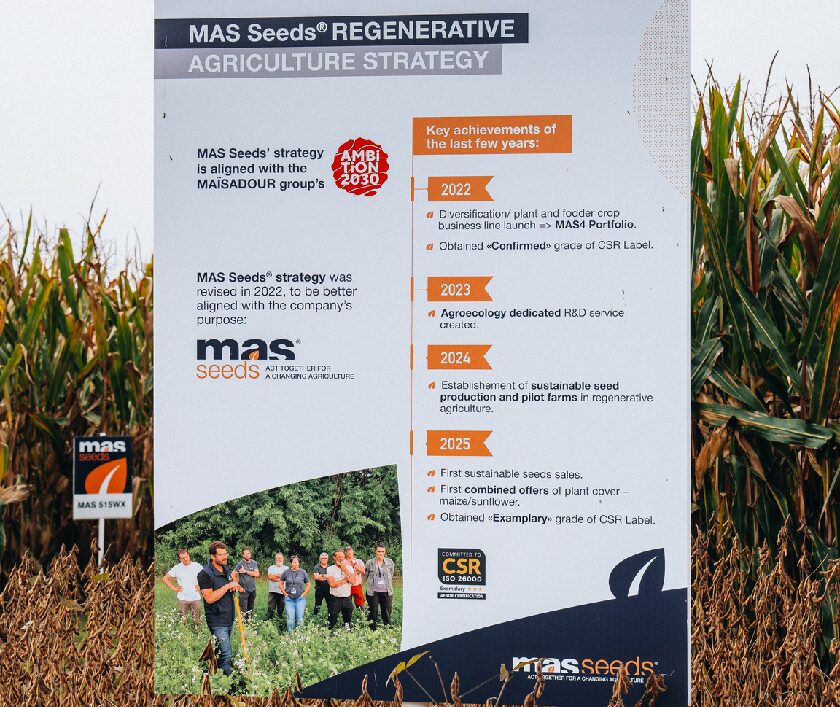
For MAS Seeds, regenerative agriculture is not only about the solutions we offer to farmers. It is also about the way we work across the whole seed value chain. Our strategy is to deploy regenerative agriculture in all key departments: R&D, production and business. 🧪 R&D: Developing solutions that combine agronomy and genetics🚜 Production: new […]
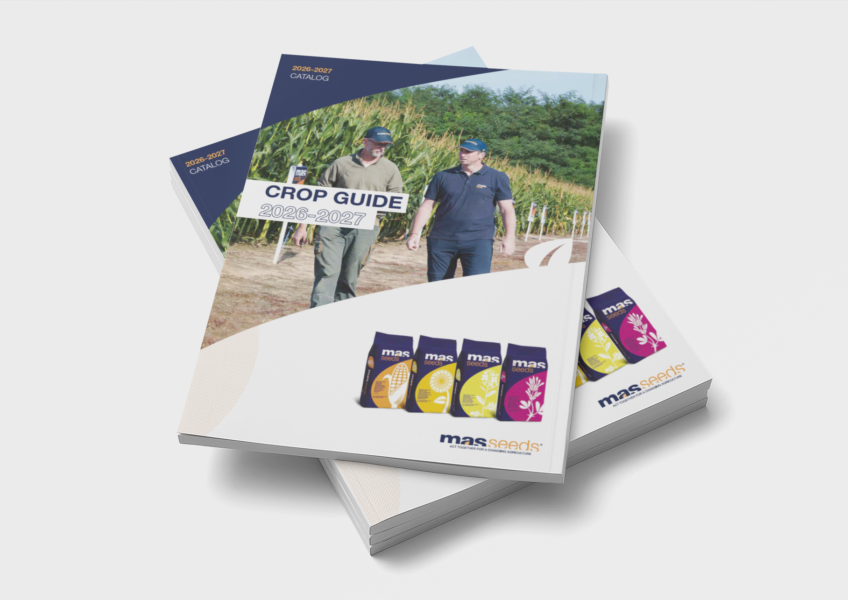
Explore our Crop and Service Guide to discover our solutions for maize, sunflower, oilseed rape, and alfalfa. Designed to support high-performing and sustainable farming systems, our offering combines advanced genetics, including WATERLOCK® and GREEN+® for maize, HelioSMART® and NO RUST® for sunflower, with tailored agro-services such as NUTRIPLUS® services for dairy farmers and AGROPLUS® services […]
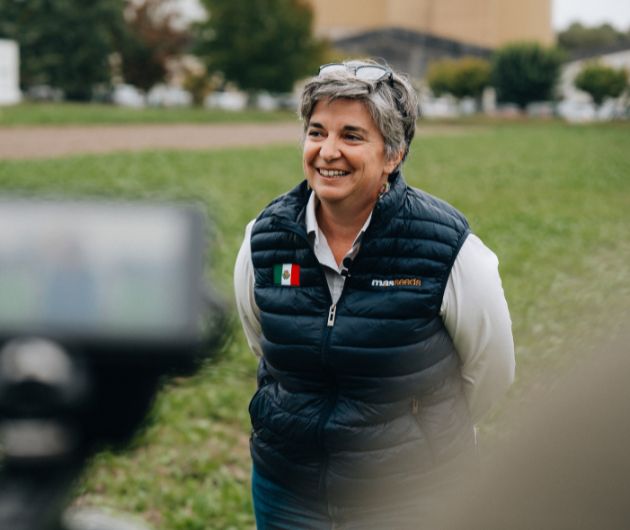
With around 1.2 million hectares of sunflower, the Romanian market remains stable and highly strategic. But behind this potential, growers are looking for hybrids able to answer several needs at once: herbicide tolerance, broomrape tolerance and mildew resistance. In some areas, more than 30% of sunflower fields are under high broomrape pressure, while mildew also […]